Operating a commercial motor vehicle calls for a deep understanding of the safety protocols designed to protect the driver, the cargo, and the public. Among the most fundamental safety tools in any cab is the fire suppression system.
The Federal Motor Carrier Safety Administration (FMCSA) mandates specific DOT requirements for fire extinguishers under 49 CFR 393.95 to ensure that every power unit is prepared for an emergency. These rules are strictly enforced during roadside inspections to prevent small mechanical or electrical sparks from turning into catastrophic highway fires.
Whether you are an owner-operator or a fleet manager, verifying that your equipment meets these federal standards is a basic step in maintaining your legal authority to operate. By understanding the specifications for ratings, mounting, and extinguishing agents, you can protect your livelihood and contribute to a safer environment for all travelers.
Understanding DOT Fire Extinguisher Requirements
The specific equipment required on a power unit depends largely on the nature of the cargo being transported. For standard commercial vehicles that do not carry hazardous materials, the regulations offer two main paths for compliance.
A carrier may choose to equip a vehicle with a single fire extinguisher that carries an Underwriters’ Laboratories (UL) rating of 5 B:C or higher. Alternatively, a carrier can opt for two separate extinguishers, provided each has a rating of at least 4 B:C. These ratings indicate the extinguisher’s ability to handle flammable liquid fires and electrical fires, which are the most common risks found in engine compartments and cab interiors.
The standards become more rigorous when hazardous materials enter the equation. Any vehicle hauling hazardous loads that necessitate placards must be equipped with at least one fire extinguisher with a UL rating of 10 B:C or more. This increased capacity is necessary because the presence of chemicals, fuels, or other dangerous goods elevates the intensity of a potential fire.
At Express Compliance, we provide the necessary oversight to help carriers manage these varying standards across diverse fleets. We work with businesses to ensure that every vehicle, regardless of its cargo, is outfitted with the correct safety gear. Doing so removes the administrative burden from the fleet manager and places it in the hands of professionals who understand the ever-changing landscape of transportation law.
Proper Mounting and Accessibility Standards
Federal law mandates that every canister should be firmly fixed to prevent it from shifting, rolling, or bouncing during transit. This is a critical safety measure, as a loose canister can become a dangerous projectile during a sudden stop or a collision. Furthermore, the mounting bracket must be designed to allow the driver to remove the device quickly in an emergency without the need for specialized tools.
The DOT mandates that the device must be readily accessible for use. This means it cannot be buried under tools, personal belongings, or luggage in the sleeper berth. Examiners look for extinguishers that are visible and positioned where the driver can reach them immediately upon exiting the cab or while still seated if a fire breaks out in the interior.
If an extinguisher is stored in a compartment, that compartment must be clearly labeled to ensure that any person assisting at the scene of an accident can find the equipment without delay.
Mandatory DOT Fire Extinguisher Inspection Requirements
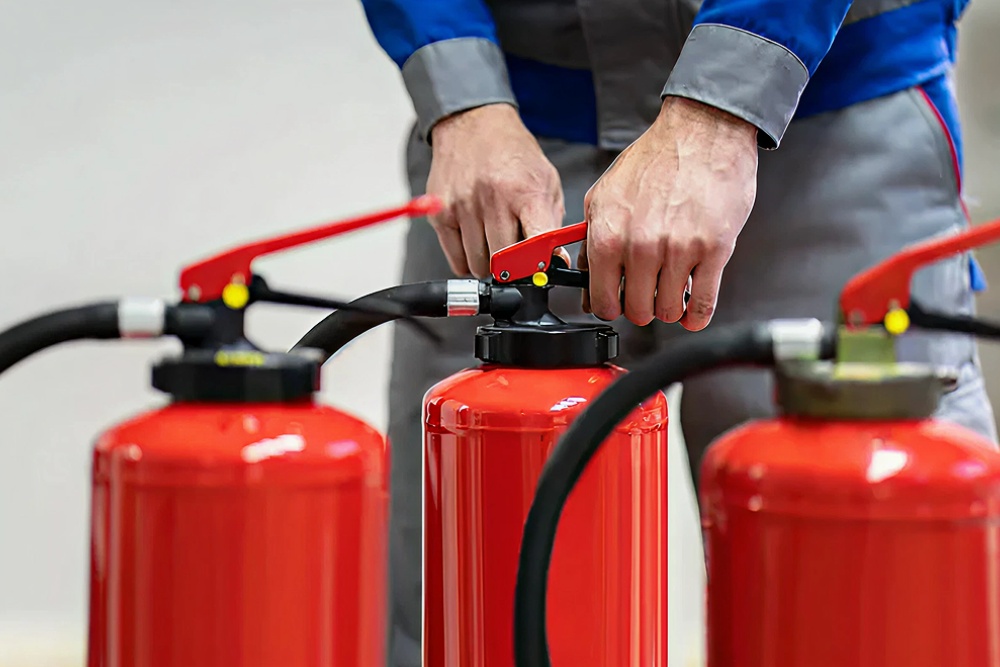
To satisfy DOT fire extinguisher inspection requirements, drivers and carriers must verify the operational status of their canisters regularly. Every extinguisher must have a visual indicator, typically a pressure gauge, that allows anyone to determine at a glance if the unit is fully charged. If the needle on the gauge falls into the red zone, the extinguisher is considered non-compliant and must be serviced or replaced immediately.
Most dry chemical extinguishers require a monthly visual check to ensure the safety pin is intact and there are no signs of physical damage or corrosion. On an annual basis, a more thorough inspection is generally required to ensure the internal powder has not compacted due to vehicle vibration.
This compaction can prevent the agent from discharging properly when the trigger is pulled. Keeping a clear record of these inspections, often via a tag attached to the canister, is the best way to prove to an inspector that you are maintaining your safety gear according to federal guidelines.
Choosing the Correct Extinguishing Agents
The DOT requires the use of extinguishing agents that do not require protection from freezing. This is why water-based extinguishers are not permitted on commercial power units, as they would become useless in cold climates.
Most commercial drivers utilize dry chemical agents, such as monoammonium phosphate. These are effective against Class B (liquids) and Class C (electrical) fires while remaining stable in extreme temperature fluctuations.
Furthermore, any agent used must comply with the Environmental Protection Agency’s toxicity standards. The chemicals must be non-toxic and safe for use in the confined space of a truck cab if necessary.
Drivers should also be aware that after any discharge, even a partial one, the extinguisher must be replaced or professionally recharged. A partially used canister will lose its pressure over time, rendering it ineffective for future emergencies.
Streamlining Fleet Oversight Through DOT Compliance Services
Our DOT compliance services provide great value to modern transportation companies. We track the expiration dates of safety equipment and the schedules for required inspections, ensuring that nothing falls through the cracks. By automating the monitoring process, we help carriers avoid the reactive “firefighting” that occurs when a fleet is found to be out of compliance during a surprise audit or roadside check.
We provide the tools and guidance necessary for drivers to perform their daily checks effectively while giving management the high-level visibility they need to maintain a perfect safety rating. This satisfies federal investigators and also protects the physical assets and the lives of the people who keep the economy moving.
Achieving Long-Term Safety and Regulatory Success
Compliance is a constant state of readiness. By treating fire extinguisher requirements as a core component of your safety culture, you build a resilient business that can withstand the scrutiny of federal oversight.
If you are looking for a partner to help you navigate the intricacies of federal emergency equipment standards, we are here to support you. Our team of experts provides the solutions your fleet needs to stay on the road. Reach out to us today or give us a call to learn how we can simplify your compliance journey and help you maintain a safer, more efficient operation.